
Superannuation Guide for Small Business Owners in Australia
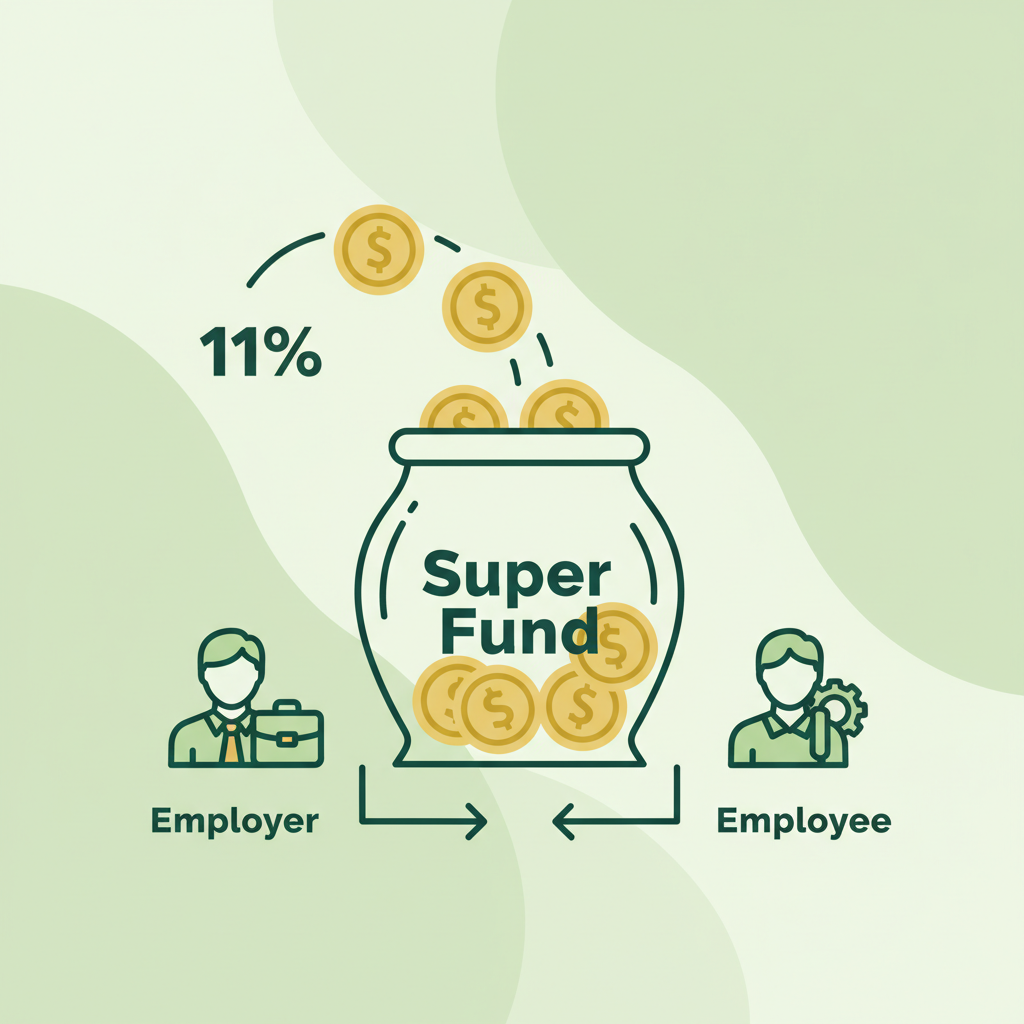
Superannuation (super) is one of the most important — and most misunderstood — obligations for Australian small business owners who employ staff. Getting super wrong can result in the Superannuation Guarantee Charge (SGC), which costs significantly more than simply paying super on time.
This guide covers your super obligations as a small business employer, how to calculate the correct amount, super payment deadlines, and what changes are coming in 2026.
The Superannuation Guarantee Rate in 2026
The Superannuation Guarantee (SG) rate for the 2025-2026 financial year is 12% of an employee's ordinary time earnings (OTE). This rate has been increasing gradually under legislation:
- 2023-2024:11%
- 2024-2025:11.5%
- 2025-2026 onwards:12% (and stays at 12%)
At 12%, the Super Guarantee rate has reached its legislated ceiling. This is the rate you must use for all eligible employees in 2026.
Who Is Eligible for Super?
You must pay super for an employee if they are:
- 18 years old or over and paid $350 or more (before tax) per month
- Under 18 years old, paid $350 or more per month, AND work more than 30 hours per week
Importantly, the $350 threshold was removed in July 2022 — previously, employees earning less than $450/month did not attract super. Now, even low-income workers earning any amount are entitled to super if they are 18+.
Super is payable regardless of whether the employee is:
- Full-time, part-time, or casual
- A temporary resident
- A sole trader or company director paid as an employee
- A family member employed in the business
How to Calculate Super
Super is calculated on Ordinary Time Earnings (OTE) — not all payments you make to employees. OTE includes:
- Ordinary hours of work (salary and wages)
- Allowances (e.g., travel allowance for ordinary hours)
- Bonuses and commissions paid for ordinary hours
- Leave loadings
OTE does not include overtime, reimbursements, or termination payments. Check the ATO's OTE guidance if you have employees with complex remuneration arrangements.
Example: An employee earns $5,000/month in ordinary wages. Super = $5,000 × 12% = $600 per month.
Super Payment Deadlines
Super must be paid at least quarterly, with amounts deposited into employees' chosen super funds by:
- Q1 (July-September):28 October
- Q2 (October-December):28 January
- Q3 (January-March):28 April
- Q4 (April-June):28 July
Note: the payment must be received by the super fund by the due date — not just sent. Allow several business days for processing. Many employers pay super monthly to simplify cash flow management.
Consequences of Not Paying Super on Time
If you miss the quarterly deadline, you become liable for the Superannuation Guarantee Charge (SGC), which is much more expensive than simply paying super on time:
- SGC is calculated on total salary and wages (not just OTE) — so the base is larger
- Interest of 10% per annum applies from the start of the quarter
- An administration charge of $20 per employee per quarter applies
- SGC payments are not tax-deductible (unlike regular super contributions)
- You must lodge an SGC statement with the ATO
Super for Sole Traders (Your Own Super)
As a sole trader, no one pays super for you — but you can make voluntary contributions to your own super fund:
- Concessional (before-tax) contributions are capped at $30,000 per year and taxed at 15% inside super
- You can claim personal super contributions as a tax deduction (lodge a Notice of Intent with your fund)
- The government co-contribution applies if you make non-concessional contributions and earn below $58,445
- You can carry forward unused concessional cap from the previous five years if your super balance is under $500,000
Payday Super: Starting 1 July 2026
From 1 July 2026, employers must pay super at the same time as wages — not quarterly. Super contributions must be received by the employee's fund within 7 business days of each payday.
- Quarterly super payments will no longer apply
- The ATO Small Business Super Clearing House will close — transition to an alternative SuperStream-compliant solution
- Penalties apply for late payments under the new Superannuation Guarantee Charge rules
What if a New Employee Has No Super Account?
If a new employee hasn't chosen a super fund, you must follow the Stapled Super Fund process. First, ask the employee to nominate their preferred fund using a Standard Choice Form. If they don't choose, log in to ATO Online Services and request their stapled super fund — the ATO will check if they already have an existing account. If no existing account is found, you must enrol them in your business's default super fund.
Track Super with BillMate
BillMate's Reports page shows your quarterly Super Guarantee total, broken down by employee with their fund name, USI, and member number — ready to enter into your Clearing House. Navigate to Reports → Payroll tab to see how much super you need to pay, when it's due, and each employee's fund details. Export the breakdown as CSV or PDF for your records.
Keep your business finances in order
BillMate helps Australian small business owners track income, expenses, and tax obligations so you always know where you stand — and can confidently meet your super, GST, and BAS deadlines.
Try BillMate Free