
Expense Tracking for Australian Small Businesses: A Complete Guide
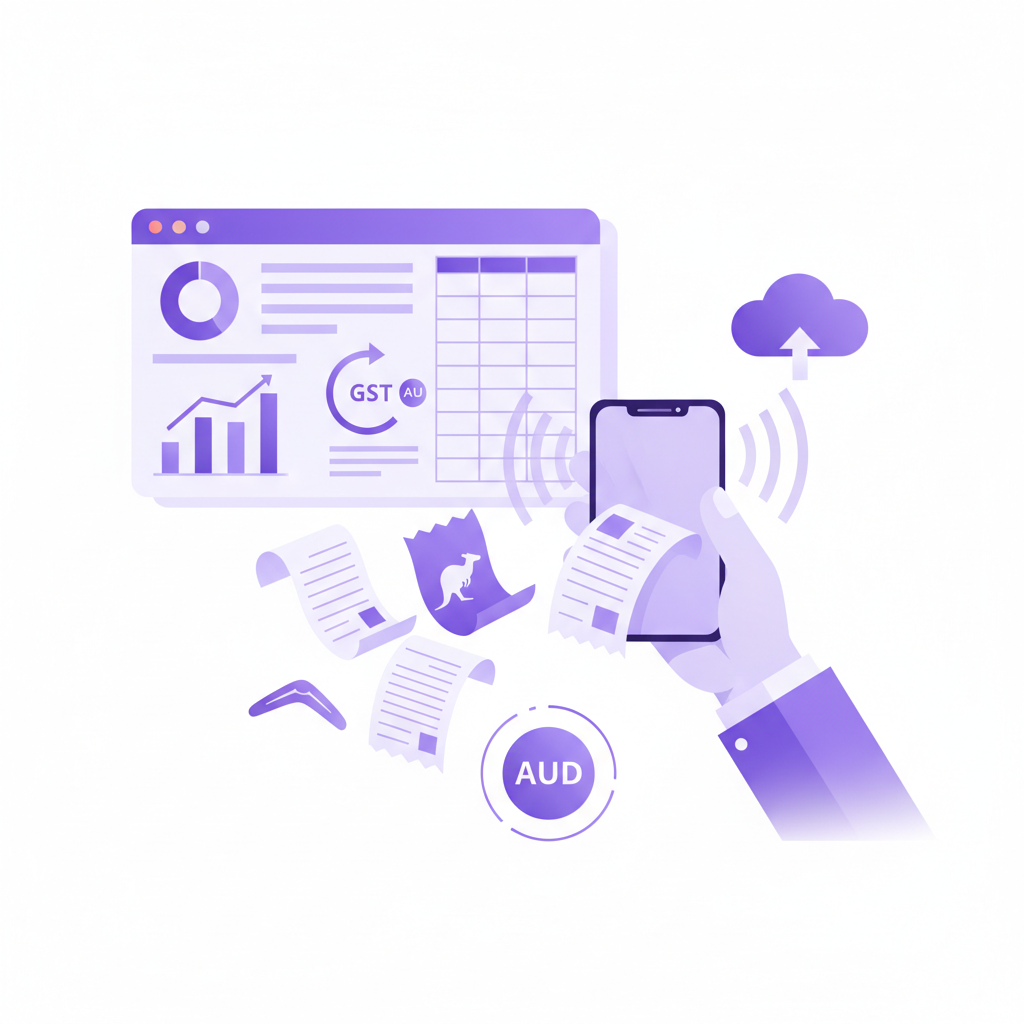
Tracking business expenses is one of the most valuable financial habits an Australian small business owner can develop. Good expense tracking means you claim every deduction you're entitled to, have accurate GST credit amounts for your BAS, and never scramble at tax time trying to reconstruct months of spending.
Yet many small businesses treat expense tracking as an afterthought — leading to missed deductions worth thousands of dollars each year. This guide covers the best practices, tools, and systems for tracking business expenses in Australia.
Why Expense Tracking Matters
In Australia, the ATO requires you to keep records of all business expenses for at least five years. But beyond compliance, there are strong financial reasons to track expenses carefully:
- Tax deductions: Every legitimate business expense reduces your taxable income. Sole traders paying the 37% marginal rate save $370 in tax for every $1,000 of deductions they claim.
- GST credits: For GST-registered businesses, tracking expenses lets you claim input tax credits on purchases — effectively getting 10% back on most business costs.
- BAS accuracy: Your BAS requires accurate totals of GST paid on purchases (Label 1B). Poor tracking leads to errors and potential ATO review.
- Business insight: Knowing where you spend money helps you identify waste, improve margins, and make better pricing decisions.
The ATO's Record-Keeping Requirements
For each business expense, you should keep a record that shows:
- The date of the expense
- The name of the supplier
- A description of the goods or services purchased
- The total amount paid (including GST if applicable)
- For GST claims over $82.50: a valid tax invoice showing the supplier's ABN
The good news: digital records are fully accepted by the ATO. You don't need paper receipts — a photo taken on your phone is sufficient, as long as it's legible and contains all the required information.
Best Systems for Tracking Expenses
Dedicated accounting/invoicing software
Tools like BillMate let you record expenses, snap receipts, categorise spending, and generate GST reports automatically. This is the most efficient option for businesses that want everything in one place.
Separate business bank account
Keeping business and personal finances separate is the single most impactful habit for expense tracking. All business spending goes through one account, making reconciliation straightforward.
ATO myDeductions app
The ATO's free myDeductions app lets you photograph receipts, log expenses, and export data to your tax return at year end. A practical option for sole traders with simple expense needs.
Spreadsheet tracking
A well-structured Google Sheet or Excel spreadsheet can work for very small businesses. Include columns for date, supplier, description, amount (ex-GST), GST amount, and expense category. Update it weekly.
Expense Categories to Track
Categorising expenses makes reporting and tax time much easier. Standard categories for Australian small businesses:
- Advertising and marketing
- Accounting and legal fees
- Bank charges
- Computer and software
- Equipment and tools
- Home office expenses
- Insurance
- Motor vehicle expenses
- Office supplies
- Phone and internet
- Professional development
- Rent and utilities
- Subcontractors
- Travel and accommodation
- Wages and super
- Other business costs
Common Expense Tracking Mistakes
- Mixing personal and business expenses: Open a dedicated business account and card and use only those for business spending
- Losing receipts: Photograph receipts immediately — the ink on thermal receipts fades quickly
- Claiming 100% of mixed-use items: If your phone is 50% personal and 50% business, you can only claim 50%
- Forgetting small expenses: Subscriptions of $10-$20/month add up to hundreds per year — track them all
- Not tracking cash expenses: If you pay cash for a business expense, you still need to keep the receipt and record it
- Leaving it until EOFY: Reconciling 12 months of expenses in June is painful. Update records weekly or at minimum monthly.
Track expenses and invoices in one place
BillMate helps Australian small businesses track income and expenses together, calculate GST automatically, and generate BAS-ready reports — so tax time is simple, not stressful.
Start Tracking with BillMate