
EOFY Checklist for Australian Small Businesses 2026
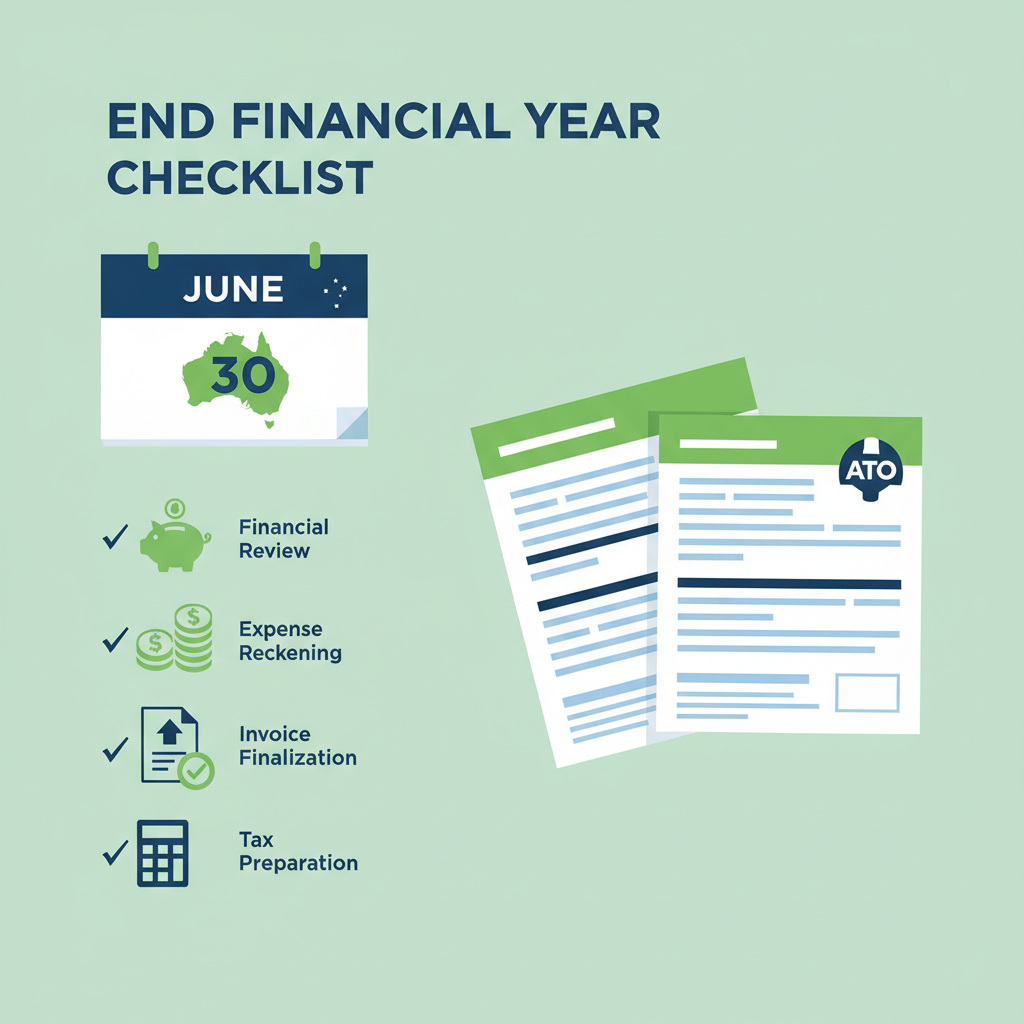
End of Financial Year (EOFY) in Australia falls on 30 June — and for small business owners, the weeks leading up to this date are critical. What you do before 30 June can significantly impact your tax position, your deductions, and your compliance with the ATO.
Use this comprehensive EOFY checklist to ensure your 2025-2026 financial year closes correctly, you've maximised your legitimate deductions, and you're ready to lodge your return with confidence.
1. Reconcile Your Accounts
- Reconcile your bank accounts
Ensure every transaction in your accounting records matches your bank statements. Resolve any unexplained differences.
- Chase outstanding invoices
Contact clients with overdue invoices. For accrual-basis businesses, income is taxable when invoiced — even if unpaid. If a debt is genuinely bad, write it off before 30 June to claim the deduction this year.
- Review unpaid bills
Pay any outstanding supplier invoices before 30 June if you want to claim the deduction this financial year (important for cash-basis businesses).
- Check for unrecorded income
Make sure all income received in 2025-2026 has been recorded, including cash payments, online transfers, and barter arrangements.
2. Maximise Your Deductions Before 30 June
- Prepay deductible expenses
Small businesses can prepay expenses up to 12 months in advance and claim the deduction this year. Consider prepaying insurance, subscriptions, rent, and professional memberships.
- Purchase equipment before 30 June
Assets under $20,000 purchased and first used (or installed ready for use) before 30 June can be immediately deducted under the instant asset write-off. Don't just order — the asset must be received and ready to use.
- Make super contributions
Contributions to your super fund must be received by the fund by 30 June to count as a deduction this year. Don't leave it until the last day — allow time for processing.
- Write off unsaleable stock
If you carry inventory, write off obsolete or damaged stock before 30 June. You can value trading stock at cost, market value, or replacement value — choose the method that gives the best tax outcome.
3. Lodge Your Q4 BAS
Your Q4 BAS (for the April-June quarter) is due 28 July. However, you should be preparing for it now:
- Ensure all Q4 sales and expenses are recorded accurately
- Reconcile GST collected (1A) and GST paid on purchases (1B)
- Check for any missed input tax credits from earlier quarters
- Include any PAYG withholding amounts for April-June
- Lodge on time — late lodgement penalties apply even if you owe nothing
4. Payroll and STP Obligations
- Pay Q4 super contributions
Super for April-June must be received by employees' funds by 28 July. To ensure it's deductible this year, pay and have it processed before 30 June if possible.
- Finalise STP reporting
Submit your STP finalisation declaration by 14 July. This replaces the old payment summary and allows employees to access their income statement via myGov.
- Check award wages are correct
Fair Work Australia minimum wages increase from 1 July each year. Review your employees' rates before the new financial year begins.
5. Gather Records for Your Tax Return
- Profit and loss statement for 2025-2026
- Balance sheet as at 30 June 2026
- All income records (invoices issued, bank deposits, cash received)
- All expense receipts and tax invoices for deductions
- Asset register (for depreciation calculations)
- Vehicle logbook (if claiming car expenses using the logbook method)
- Home office records (hours worked from home, for the fixed rate method)
- Super contribution records and Notice of Intent forms (if claiming personal super deductions)
- Loan and interest records (if you have business financing)
6. Tax Return Lodgement Deadlines
- Individuals (incl. sole traders) — self-lodging:31 October 2026
- Individuals — lodging through a tax agent:May 2027 (agent dependent)
- Companies, trusts, and partnerships:31 October 2026 (or later via tax agent)
Walk into EOFY fully prepared
BillMate keeps your income, expenses, and GST organised year-round so EOFY is a formality, not a panic. Generate your annual income and expense report in seconds.
Get EOFY-Ready with BillMate